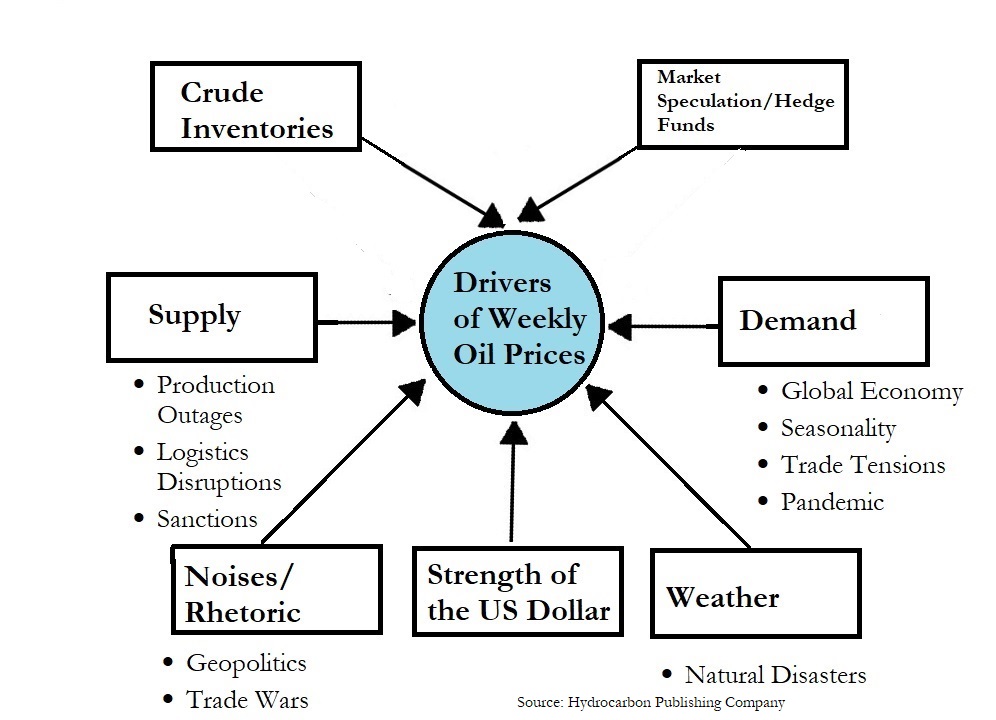
In the US, soaring fuel costs became a major political vulnerability for the White House ahead of Nov. midterm elections, driven by supply disruptions from the Iran conflict and Eastern Europe.
October 05, 2026
The crude oil market experienced a turbulent week marked by whiplash-inducing geopolitical rhetoric, shifting naval dynamics in the Strait of Hormuz, and acute product market pressures.
October 03, 2026
The global crude oil market enters the coming week navigating a fragile equilibrium between recovering physical supply routes and extreme geopolitical tension.
October 03, 2026
A potential US diesel export ban would hit Latin America hardest, with US imports covering as much as 50% of consumption across Mexico, Ecuador, Chile, and Peru, while Asia braces for uneven fallout despite limited reliance on US middle distillates.
October 03, 2026
Market watchers present their views on how the wars in Ukraine and the Middle East are reshaping global energy security, pushing the world from maximum efficiency toward resilience.
October 02, 2026
US commercial crude stocks rose modestly in the week ending Sep. 25, but the headline build hides a far tighter reality: distillate inventories are 14% below the five-year average, the SPR has fallen to a four-decade low, and Washington is preparing another 40 MM bbl release into a market that barely took the last one.
October 02, 2026
Canada's oil sands are set for a record 3.5 MM b/d in 2026, a 25th consecutive year of growth, even as Ottawa fast-tracks the 1 MM b/d Pacific Link pipeline to the west coast to loosen the country's grip on a single customer: the US, which still takes more than 90% of Canadian crude exports.
October 02, 2026
Four Latin American oil stories are converging: Brazil draws foreign majors with record 4.5 MM b/d output, Venezuela reopens the world's largest reserves, Guyana produces over 900K b/d with 20.8% GDP growth, and Colombia bets on fracking to reverse a 17% gas reserve collapse.
October 02, 2026
Middle East crude exports have staged what J.P. Morgan calls a
October 02, 2026
India is actively recalibrating its energy strategy to insulate itself against persistent global supply chain disruptions and geopolitical volatility.
October 02, 2026