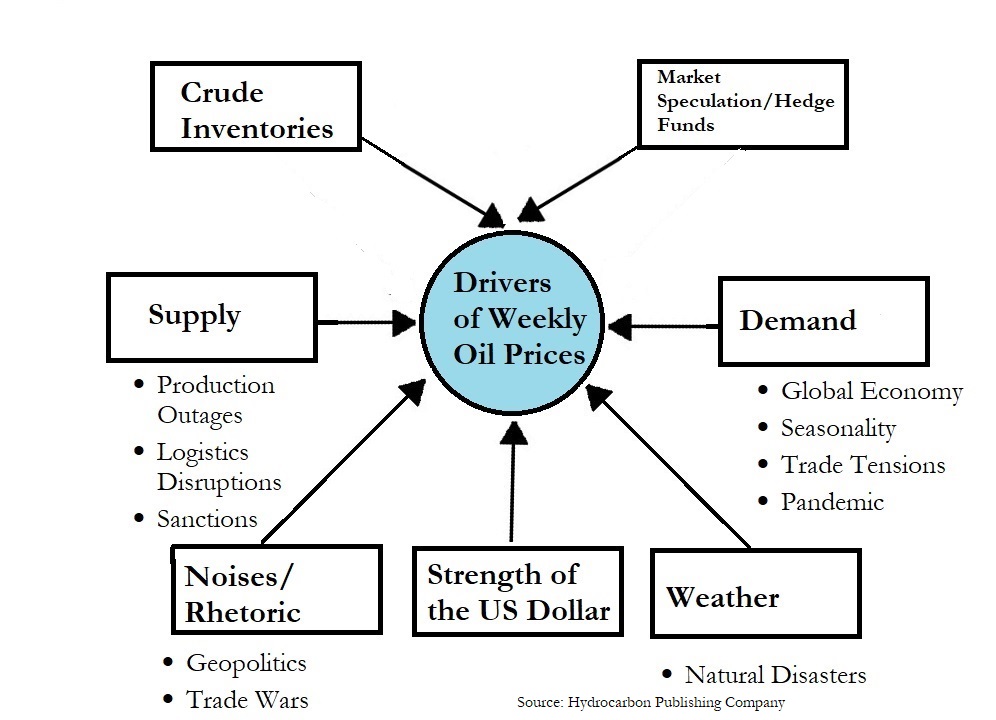
Crude flows from the Middle East have recovered, but the market has not normalized. Freight costs, war-risk premiums, depleted inventories, and constrained fuel exports have pushed the floor under oil prices materially higher.
October 12, 2026
In the US, soaring fuel costs became a major political vulnerability for the White House ahead of Nov. midterm elections, driven by supply disruptions from the Iran conflict and Eastern Europe.
October 05, 2026
As US national retail prices surge to record highs ahead of the Nov. 3 midterm elections, the administration has faced intensifying political pressure to curb petroleum outflows.
September 28, 2026
The global diesel crisis has become a structural shock, reshaping the crude oil market.
September 21, 2026
As military hostilities escalate across the Middle East, global energy markets face unprecedented supply chokepoints and structural bottlenecks.
September 14, 2026
Geopolitical conflicts, EU regulatory mandates, and critical infrastructure bottlenecks have converged to create an unprecedented structural deficit in the global fuel market.
September 05, 2026
US refiners face diverging supply realities: an immediate 300 K b/d Canadian production cut amid escalating trade tensions, versus a historic US-Venezuela deal (Aug. 27) granting 55% control of a 100-year concession over 65 B barrels of reserves.
August 29, 2026
It is a follow-up to the Feature of the Week: Diesel Crisis, on Aug. 3. While crude markets remain relatively muted below $100/b, downstream fuel markets are experiencing unprecedented supply tightness, particularly diesel.
August 24, 2026
The International Energy Agency's August Oil Market Report presents a striking paradox: global oil demand is sinking, yet supply is collapsing even faster, leaving markets in a deepening deficit.
August 17, 2026
Energy markets are navigating unprecedented supply constraints stemming from the five-month-old US-Iran conflict, which has closed the critical Strait of Hormuz chokepoint and cost the global market an estimated 2.6 B bbl of oil.
August 10, 2026